
Small Tree Trimming
Pruning Decisions Made at the Tree
Small tree trimming in Livonia for residential and commercial properties with overgrowth near structures or adjacent plantings
What a trimmed tree looks like when the job is finished—balanced canopy, clean branch ends, no dead wood crossing through the center—reflects decisions made before a single cut. Phantom Lawns provides small tree trimming for residential and commercial properties in Livonia, with scope determined on-site based on what each tree actually needs rather than a fixed service package applied uniformly. Properties with mixed tree cover near rooflines, utility easements, or adjacent landscaping are where this kind of assessed approach matters most.
The process begins with evaluating the tree in person—identifying dead or crossing branches, assessing how growth patterns are interacting with nearby structures, and determining what shaping will support long-term health versus what's purely cosmetic. Dead wood and crossing branches are removed first, then the tree is shaped for both appearance and to reduce future encroachment. All debris from the trimming is cleaned from the site before the crew leaves.
Arrange an on-site assessment to review which trees on your property are candidates for trimming this season.
What Proper Small Tree Trimming Requires
The distinction between trimming that helps a tree and trimming that sets it back lies in cut placement and sequence. Removing a branch at the right point—just outside the branch collar rather than flush to the trunk or mid-shaft—allows the tree to compartmentalize the cut cleanly. Phantom Lawns applies this standard to pruning work on residential and commercial properties alike, which is especially relevant in Northville-area properties where ornamental trees are planted in established landscape beds and poor pruning creates multi-season recovery problems for the surrounding plantings.
After trimming is complete, the tree's structure is visibly more open, with light able to move through the canopy rather than being blocked by crossing or competing branches. Interior dead wood that was creating congestion is gone, and the silhouette reflects the tree's natural growth form rather than an arbitrary shape imposed by the cut pattern.
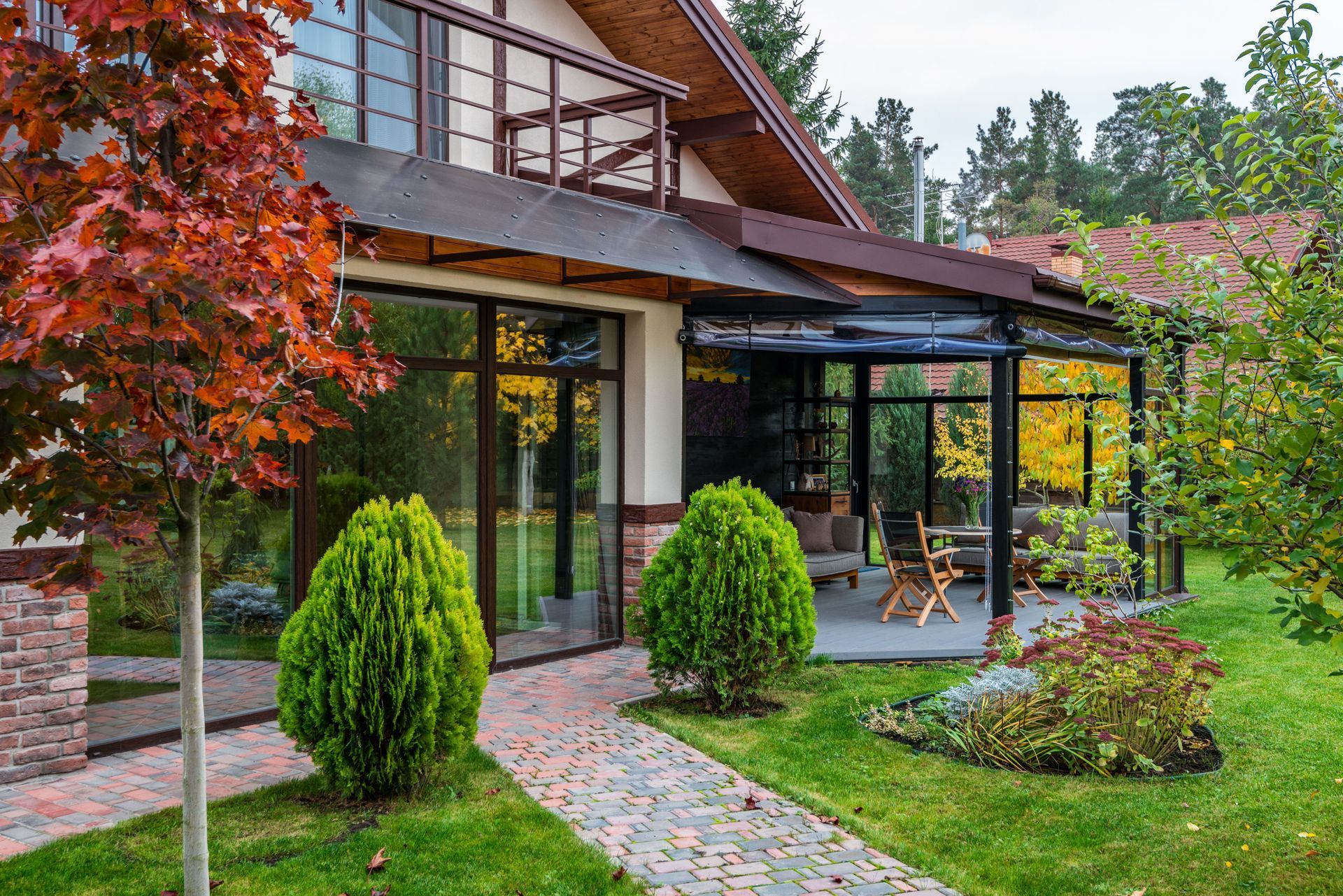
Phantom Lawns handles small tree trimming alongside core landscape maintenance work, which means trimming can be scheduled as a standalone service or coordinated with other bed or ground cover work happening on the same property. Commercial properties with multiple trees are assessed individually since growth rates and conditions vary enough that a single pass-through approach doesn't apply consistently across a site.
FREQUENTLY ASKED QUESTIONS
Common Questions About This Service
The questions below address how small tree trimming is actually performed—what drives the decisions on site, how the work is sequenced, and what clients can expect once the job is finished.
What determines which branches get removed during trimming?
Dead, diseased, and crossing branches are the priority. After those are addressed, shaping decisions are based on the tree's natural growth pattern and where new growth is heading relative to structures, utilities, or adjacent plantings.
How does trimming near rooflines or utility easements get handled?
Branches approaching a roofline or utility corridor require careful removal to avoid dropping debris onto the structure. Cut sequence matters here—larger limbs are staged down in sections rather than dropped whole, which controls where material lands during removal.
When is the right time to trim a small tree?
Timing depends on species and condition. Trees with obvious dead wood or structural problems can be trimmed any time. For shaping work, many deciduous species are easier to assess and trim while dormant, since the branch structure is fully visible without foliage obscuring crossing or crowded growth.
What happens to all the branches and debris after trimming?
All trimmings are removed from the property. Nothing is left in piles on the lawn or stacked against the fence line. Site cleanup is part of the service, not an add-on.
How do you approach trimming on properties with trees planted inside established landscape beds?
Care is taken around the root zone and surrounding plantings. Working inside a bed means the crew is managing where they stand and where material drops, so smaller sections are cut and cleared progressively rather than letting large limbs fall freely into the planting area.
Phantom Lawns also provides small tree trimming in Plymouth, Canton, Northville, Westland, and South Lyon. To schedule an on-site review of your trees, call Phantom Lawns at (734) 725-1333 to confirm scope before the busy season.